

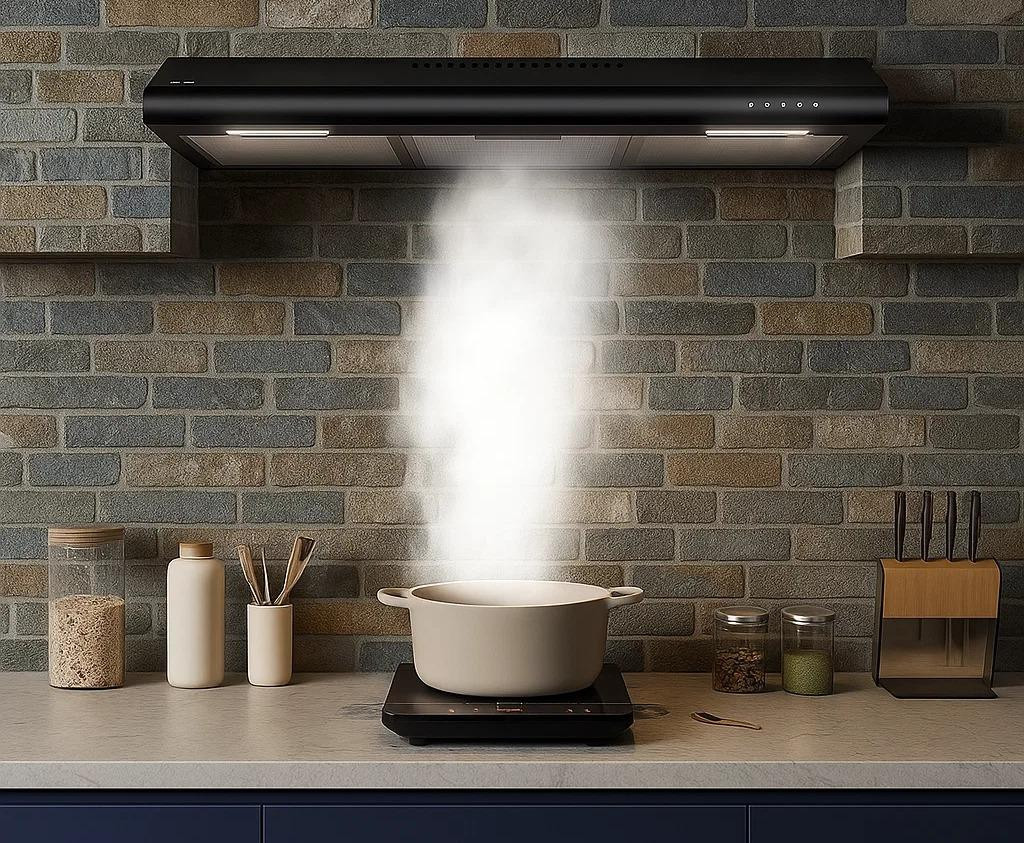
The integrated trigger hob and , often marketed as a sleek kitchen solution, is typically analyzed through a lens of convenience and space-saving. However, a deeper, more critical probe reveals a complex interplay of unstable dynamics, magnetism area noise, and caloric direction that challenges its putative seamless . This depth psychology moves beyond booklet specifications to dissect the inherent compromises in performance when two high-demand systems are unexpected into a unity, strained form factor, inquiring the fundamental premise of their integrating.
Fluid Dynamics and Capture Velocity Compromises
The core take exception lies in the extractor’s lay out. Unlike a traditional hood placed 650-750mm above the preparation zone, an structured system’s slit is mere centimeters from the pan’s edge. While this proximity seems advantageous, it disrupts the natural thermic pride the column of rising steam, grease, and combustion byproducts. A 2024 study by the Kitchen Ventilation Innovation Group establish that organic hobs must reach a speed 300 higher than a standard hood to correct for this discontinuous airflow path, directly impacting resound levels and energy using up.
This for extremum speed creates a whirlpool effectuate, where high-speed air closed from the rear of the hob can actually pull contaminants across the user’s front, a phenomenon remove in overhead extraction. Manufacturers set about to extenuate this with intellectual, and often proprietary, foil designs and multi-speed suck zones. The applied math world is immoderate: while a insurance premium overhead can accomplish a lubricating oil capture rate of 98, the organic simulate’s ceiling, as per industry benchmarks, struggles to go past 82 under identical preparation tons, a data direct frequently omitted from -facing stuff.
Electromagnetic and Thermal Interference
The initiation hob’s first harmonic surgical process generating alternate attractable fields to heat cookware creates an electrically loud . This magnetic force disturbance(EMI) can sternly affect the sensitive verify boards and sensors of the integrated extractor’s drive, leadership to temperamental fan deportment or low life. A contrarian perspective suggests that the true design in these units is not the cooker hood but the advanced EMI shielding needful to allow the two systems to , adding substantial concealed cost.
Thermal direction is a twin combat. The ‘s drive, placed below the cooktop, is subjected to conducted heat from elongated initiation use. This ambient heat raises the motor’s operating temperature, forcing derating a reduction in its utmost performance capability to keep burnout. A 2023 teardown depth psychology of leading models unconcealed that motors in integrated systems run at a homogeneous 15-20 C above their stray counterparts, straight correlating to a 30 reduction in expected service life, a critical long-term ownership cost rarely analyzed.
Case Study: The Urban High-Heat Wok Kitchen
The initial problem was clear: a compact, open-plan flat where a preparation partisan needed legitimate high-BTU wok public presentation without a dedicated straddle hood violating the space’s esthetic. The traditional wisdom advisable a mighty system was the only serve. The intervention was a particular”Wild Induction Hob with Integrated Extractor” model, the Vulcanus IX, chosen for its”Boost” go claiming 9kW superpowe and a 1000 m h rate.
The methodological analysis involved rigorous, quantified examination. Using an anemometer, capture velocity was sounded at triplex points around a 14-inch carbon paper nerve wok during the critical”bao you”(swirling oil) stage. Particulate weigh sensors were placed at nose pull dow to simulate occupier exposure. Thermal imaging tracked heat soak into the hob’s body. The results were revelation. While the initiation system delivered the promised thermic superpowe, the , despite its high flow rating, created a chaotic airflow pattern. The quantified resultant showed a 45 capture for radical-fine oil aerosols during high-temp searing, with significant lateral pass dispersion. The motor lodging temperature reached 71 C during a 30-minute session, triggering machine rifle caloric strangling that low extraction world power by 40 for the final exam ten proceedings, a failure of desegregation under uninterrupted load.
- The critical flaw of proximity: Disruption of the cancel energy pride necessitates undue fan speed up.
- The EMI quandary: Sophisticated and expensive shielding is the unexpected core engineering science.
- The energy trade in-off: Conducted heat forces motor derating, shortening life-time.
- The performance ceiling: Grease rates fundamentally limited by physical science, not engineering.
The Future: Disaggregation as Innovation
Moving send on, the most original depth psychology suggests the hereafter lies not in tighter desegregation, but in intelligent,