

Short links have become an important part of modern digital marketing because they make long, complicated web addresses easier to share, remember, and track. Whether a business is promoting a product on social media, sending an email campaign, printing a QR code, or running an offline advertisement, a clean and simple link can make the customer journey smoother.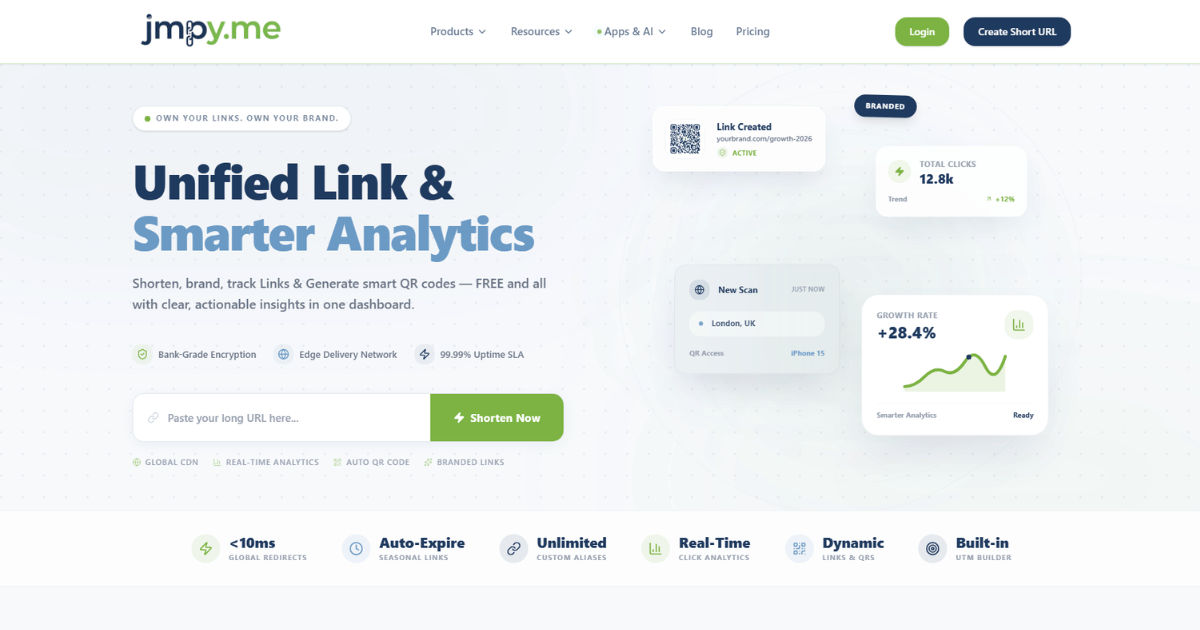
A long URL can look messy and difficult to understand, especially when it contains tracking codes, product categories, session information, or other technical details. Short links turn that lengthy address into a compact and more manageable version that is easier to use across different marketing channels.
However, their value goes beyond appearance. A well-managed short link can help marketers measure campaign performance, improve user experience, organize promotional activities, and make marketing messages look more professional. When marketers can see which links receive clicks and where those clicks come from, they can make better decisions about future campaigns.
This comprehensive guide explains how short links improve marketing, why businesses use them, how they affect customer behavior, and how marketers can use them effectively without sacrificing trust or transparency.
What Are Short Links?
A short link is a condensed version of a longer web address. Instead of displaying a long URL with many characters, a shortened link uses fewer characters while directing the visitor to the original destination.
For example, a normal web address might contain a long path, product information, tracking parameters, or campaign details. When this address is shortened, the user sees a much simpler link.
The shortening process generally works through a redirection system. When someone clicks the shortened address, the service recognizes the link and sends the visitor to the original webpage.
From the customer's perspective, the process usually happens quickly. They click the link and arrive at the intended destination without needing to understand what happens behind the scenes.
Businesses use this system for many purposes. They may create links for product pages, landing pages, blog articles, event registrations, downloadable resources, or special offers.
The basic purpose is simple: make a link easier to manage and use.
Why Do Marketers Use Short Links?
Marketing involves communication across many different platforms. A business may promote the same campaign through Instagram, email, text messages, printed flyers, online advertisements, and social media posts.
Each channel has different requirements.
A long URL may be acceptable in an email, but it can look unattractive in a social media post. It may also be difficult to type into a phone browser or include in a printed advertisement.
Short links solve some of these practical problems.
They give marketers a cleaner way to direct people to online content. More importantly, many link-shortening platforms provide analytics that allow marketers to understand how their links are performing.
This combination of convenience and measurement makes shortened URLs useful in digital marketing.
A marketer can create a unique link for a particular campaign and then monitor activity around it. This information can help answer questions such as:
How many people clicked the link?
Which campaign generated the most traffic?
When were people most active?
Which marketing channel performed best?
Did a particular promotion attract interest?
The answers can help businesses improve their marketing decisions.
Short Links Make Marketing Messages Cleaner
One of the most immediate benefits of short links is improved visual presentation.
Long URLs can contain dozens or even hundreds of characters. When included in a marketing message, they can distract from the main content.
A shortened URL takes up less space.
This is particularly useful when marketers have limited room for their message. Social media posts, text messages, advertisements, and printed materials often benefit from concise communication.
Imagine a business promoting a new product.
The main message might explain the product's benefits, provide a promotional offer, and encourage the customer to learn more. If the link underneath is extremely long, it can make the entire message appear complicated.
A short link creates a cleaner appearance.
This may seem like a small improvement, but marketing is often influenced by small details. When people encounter information that looks simple and organized, they may find it easier to process.
Clean presentation can also make a brand appear more professional.
Short Links Improve the User Experience
A good marketing campaign should make the customer journey as easy as possible.
People are busy. They may be browsing on a smartphone while traveling, checking social media during a break, or reading an email quickly.
If a link is difficult to understand or use, it can create unnecessary friction.
Short links reduce the visual complexity of URLs. They can also be easier to copy, paste, share, or type manually.
This matters especially in situations where customers cannot simply click a hyperlink.
For example, a business might display a link on a poster or billboard. If the address is long and complicated, a person may not want to type it into their phone.
A shorter address is more practical.
The easier it is for a customer to reach the intended destination, the fewer obstacles exist between the marketing message and the desired action.
Short Links Are Useful for Social Media Marketing
Social media is one of the most common areas where marketers use shortened URLs.
Platforms such as social networks often encourage concise communication. A marketer may have limited space for text and wants to focus attention on the main message.
A long URL can consume valuable space and make the post look cluttered.
Short links help solve this problem.
They allow marketers to create a simple call to action such as "Learn more," "Shop now," or "Register today" followed by a compact link.
They can also be useful when sharing content across different social platforms. A marketer can create separate links for different campaigns and compare their performance.
For example, a business may promote the same product on three social channels. Each platform can receive its own shortened link.
After the campaign, the marketing team can compare the results.
If one platform generates significantly more clicks, the business may decide to invest more time or advertising budget there.
This turns a simple link into a source of marketing insight.
Short Links Help Track Campaign Performance
One of the biggest advantages of shortened URLs is tracking.
Many professional link-shortening platforms provide analytics that show how people interact with a link.
Depending on the service, marketers may be able to view information such as click volume, approximate geographic location, device type, referral source, and timing.
This data can help marketers understand customer behavior.
Suppose a company launches a seasonal promotion. The marketing team shares one link through email, another through social media, and another through a printed advertisement.
By assigning separate links to each channel, the business can compare traffic.
If the email campaign receives 5,000 clicks while the social media campaign receives 2,000, the marketer has evidence that email was more effective for that particular promotion.
The information can then influence future marketing decisions.
Without tracking, marketers may only know that people visited the website. With organized link data, they can better understand how those visitors arrived.
Short Links Make A/B Testing Easier
Marketing teams often use A/B testing to compare different approaches.
In a basic A/B test, two versions of a campaign are shown to different groups of people. The marketer then compares the results.
Shortened URLs can support this process.
For example, a company may create two different promotional messages for the same product. Each message uses a different link.
The marketer can then measure which version generates more clicks.
This does not automatically prove that one message caused more sales, because clicks are only one part of the customer journey. However, click data can provide useful information about initial interest.
Marketers can combine link data with other metrics such as conversions, purchases, sign-ups, and revenue.
This creates a more complete view of campaign performance.
Short Links Can Support Better Campaign Attribution
Attribution is the process of understanding which marketing activities contribute to customer actions.
This can be difficult when a business promotes the same offer through many channels.
For example, a company might advertise a service through:
-
Email newsletters
-
Social media
-
Search advertisements
-
Influencer partnerships
-
Printed flyers
-
SMS campaigns
If every channel sends visitors to the same destination without any tracking structure, it can be difficult to determine where traffic originated.
Unique short links can help separate these sources.
A business might create one link for email and another for social media. Each link can redirect users to the same landing page while allowing the marketer to distinguish between traffic sources.
This creates a clearer picture of campaign performance.
However, marketers should remember that link clicks are not the same as conversions. A campaign that generates many clicks but few sales may not be as valuable as one that generates fewer clicks but more customers.
The best marketing analysis considers the entire customer journey.
Short Links Improve Offline Marketing
Digital marketing is not limited to the internet.
Businesses often use printed materials to drive people to online destinations. These materials may include posters, brochures, business cards, product packaging, event banners, and direct mail.
This creates a challenge.
A person cannot click a printed URL.
They must type it manually into a browser.
This is where short links can be particularly useful.
A short, memorable web address is easier to enter than a long URL containing complicated parameters.
For example, a campaign could use a simple link that directs customers to a specific promotional page.
The customer sees the address, types it into their browser, and reaches the destination.
This can connect offline marketing with online measurement.
A business can then evaluate whether its printed campaign generated online traffic.
Short Links Work Well With QR Codes
QR codes have become common in marketing because smartphones can scan them quickly.
A QR code can contain a web address, and the destination can be managed through a shortened URL system.
This can offer additional flexibility.
For example, a restaurant may place a QR code on its table that directs customers to a digital menu. A retailer may use a QR code on product packaging to provide additional product information.
A business can also use QR codes in advertisements, event materials, and promotional displays.
When a short link is connected to a QR code, marketers may have more options for managing the destination and measuring engagement, depending on the technology being used.
This is especially useful for campaigns where marketers want to know how many people interacted with printed materials.
Short Links Can Make Sharing Easier
Marketing content often spreads beyond the original campaign.
Customers may share links with friends, colleagues, or family members. Employees may share promotional materials internally. Influencers may include links in their content.
A shorter URL is easier to copy and share.
It can also be easier to remember.
This matters because marketing is not always a one-way communication. Customers can become part of the distribution process by sharing useful or interesting content.
For example, a company publishes a helpful guide and promotes it through a shortened URL.
A reader finds the guide useful and sends the link to a colleague.
The content has now reached another person without the company paying for another advertisement.
Short links do not guarantee sharing, but they can remove some practical barriers that make sharing inconvenient.
Short Links Can Strengthen Brand Recognition
Some link-shortening platforms allow businesses to use branded short links.
Instead of relying on a generic shortened domain, a company may use a custom domain that reflects its brand.
This can make the link feel more familiar.
For example, when customers recognize the brand name within a link, they may have more confidence about where the link will take them.
Branded links can also support consistency across marketing campaigns.
The link becomes another small element of the company's identity, similar to its logo, colors, typography, and messaging style.
However, branding should be combined with transparency.
A shortened link should not be used to hide a suspicious destination or mislead users. Customers should have a reasonable understanding of what they are being asked to click.
Trust is more valuable than a temporary increase in clicks.
Short Links Can Increase Click Confidence
People are often cautious about clicking unfamiliar links.
Cybersecurity concerns have made users more aware of phishing, scams, and malicious websites.
A generic shortened link can sometimes create uncertainty because the final destination is hidden.
This is why branded short links can be helpful for businesses.
A recognizable domain can give users more context about the source of the link.
However, marketers should still use secure and reputable link management services. They should also ensure that links lead to legitimate destinations.
Businesses should avoid practices that deliberately disguise where a link goes.
The goal should be to make the link simpler, not deceptive.
Short Links Help Organize Marketing Campaigns
Large marketing teams may manage dozens or hundreds of campaigns.
Without organization, links can quickly become difficult to manage.
A structured link system can help marketers keep track of campaigns by assigning unique links to specific activities.
For example, a business might create separate links for:
-
A summer promotion
-
A holiday sale
-
A product launch
-
A conference
-
An influencer campaign
-
An email newsletter
Each link can be associated with a particular campaign.
This makes reporting easier.
Instead of looking at one large collection of traffic data, marketers can separate results by campaign and channel.
Good organization becomes increasingly important as a business grows.
Short Links Can Improve Email Marketing
Email marketing remains an important communication channel for many businesses.
A marketing email may contain several calls to action, including links to products, articles, registrations, or special offers.
Long URLs can make emails look cluttered.
Shortened URLs can create a cleaner structure.
They may also make it easier for marketers to track individual campaigns.
For example, a company might send one email to existing customers and another to potential customers. Each campaign can use a separate tracked link.
The resulting data can help the marketing team compare engagement.
However, marketers should not focus exclusively on clicks.
Email performance should also consider open rates, conversions, unsubscribe rates, and revenue.
A successful email campaign is one that produces meaningful business results, not simply a high number of link clicks.
Short Links Can Help Influencer Marketing
Influencer marketing often involves measuring the impact of individual creators.
A company may work with several influencers and want to understand which partnerships generate the most interest.
Unique shortened links can help.
Each influencer can receive a separate link.
The business can then monitor how many people click each link.
If the links are connected to conversion tracking, the company may also be able to measure purchases or sign-ups.
This provides more useful information than simply counting likes or views.
For example, one influencer may have a smaller audience but generate a large number of customers. Another may have a much larger audience but produce very few conversions.
Link data can help marketers identify these differences.
Short Links Can Support Event Marketing
Events often require participants to take specific actions.
They may need to register, purchase tickets, download an application, view a schedule, or access additional information.
A shortened URL can make these actions easier to promote.
Event organizers can place links on posters, presentation slides, badges, brochures, and promotional materials.
The same campaign can also use QR codes for mobile users.
By tracking the links, organizers may gain insights into how people interact with event promotions.
This information can be useful when planning future events.
For example, if most registrations come from digital advertisements rather than printed materials, the organizer may adjust the marketing strategy next time.
Short Links Make Mobile Marketing More Practical
Most digital marketing now reaches people through smartphones.
Mobile users often have limited screen space and may be less willing to interact with complicated information.
Short links are naturally suited to mobile communication.
They are easier to display in messages and easier to copy when necessary.
They can also work well in SMS marketing, mobile advertisements, and social media campaigns.
A mobile-friendly link should lead to a page that is also optimized for smartphones.
This is important because shortening a URL does not automatically improve the entire user experience.
If the destination page loads slowly or looks broken on a mobile device, the customer may still leave.
The link is only one part of the journey.
Short Links Provide Useful Marketing Data
Data is one of the strongest reasons businesses use link management tools.
Marketing decisions are more reliable when they are based on evidence rather than assumptions.
Link analytics can provide information about audience engagement.
A marketer may discover that a campaign receives most of its clicks during certain hours. Another campaign may perform better on mobile devices.
These patterns can influence future decisions.
For example, if a business notices that most users interact with a campaign during the evening, it might test publishing future content at different times.
If a particular audience responds strongly to a specific channel, the company may increase its investment there.
Data does not replace creativity.
Instead, it helps marketers understand whether their creative decisions are producing the intended results.
Short Links Can Help Reduce Marketing Waste
Every marketing campaign involves resources.
Businesses spend money on advertising, content creation, design, staff time, and promotional activities.
Poor measurement can lead to wasted resources.
Suppose a company spends heavily on three marketing channels but does not know which one generates meaningful traffic.
The business may continue investing equally in all three.
Tracking links can provide additional evidence.
If one channel consistently produces little engagement while another performs strongly, the marketing team can investigate the difference.
This does not mean the weaker channel should immediately be abandoned.
It may need a different message, audience, offer, or landing page.
The important point is that marketers can make decisions based on actual campaign data.
Short Links Are Useful for Content Marketing
Content marketing depends on distributing valuable information to an audience.
Businesses may create articles, guides, research reports, videos, and other resources.
These materials need to reach the right people.
Short links can simplify content promotion.
A business might create a campaign around a new guide and share the link through email, social media, and partner websites.
Each channel can have a unique tracking link.
The marketing team can then compare performance.
This helps answer an important question: where does the audience actually discover and engage with the content?
The answer can influence future content distribution.
Short Links Can Improve Marketing Testing
Successful marketing rarely happens through one perfect campaign.
Businesses test different ideas.
They may experiment with headlines, offers, audiences, images, calls to action, and platforms.
Shortened links can support these experiments by providing measurable destinations.
A marketer can create separate links for different campaign variations.
The results can then be compared.
This approach encourages continuous improvement.
Instead of assuming that a campaign will work, marketers can launch a test, collect data, evaluate the results, and make adjustments.
Over time, this process can produce stronger marketing strategies.
Short Links and Conversion Tracking
Click data is useful, but conversions are usually more important.
A conversion could mean a purchase, registration, subscription, download, booking, or inquiry.
Marketers should therefore connect link performance with conversion data whenever possible.
For example, a campaign might receive 10,000 clicks but only generate 20 sales.
Another campaign might receive 2,000 clicks and generate 100 sales.
The second campaign may be more valuable even though it received fewer clicks.
This demonstrates why marketers should not judge success based solely on link activity.
The strongest approach is to evaluate the complete funnel.
A typical funnel may include:
Awareness
Interest
Click
Website visit
Conversion
Repeat purchase
Short links can help measure the click stage, while other analytics systems are needed to understand what happens afterward.
Short Links Should Be Used Responsibly
Short links offer many advantages, but they should not be used carelessly.
Because shortened URLs can hide the final destination, users may sometimes hesitate to click them.
Businesses should prioritize transparency and security.
Marketers should use reputable link management providers and avoid sending customers to unexpected pages.
They should also regularly review important links.
If a campaign runs for several months, the business should make sure the destination page remains active and relevant.
Broken links can damage the customer experience.
A marketing link should always lead to a useful destination.
Common Mistakes Marketers Make With Short Links
One common mistake is creating links without a clear organizational system.
If a business creates hundreds of links without naming or categorizing them properly, managing them later can become difficult.
Another mistake is focusing only on clicks.
High click volume does not necessarily mean high marketing performance.
A third mistake is using links that look suspicious.
If customers do not recognize the domain or trust the source, they may avoid clicking.
Another problem is sending users to slow or poorly designed landing pages.
Even the best campaign cannot perform well if the destination creates frustration.
Finally, marketers sometimes forget to test their links before launching a campaign.
Every important link should be tested on relevant devices and platforms.
How to Use Short Links Effectively
Businesses can get more value from shortened URLs by following a few practical principles.
First, use a reliable link management platform.
Second, create a consistent naming system for campaigns.
Third, use unique links when you need to compare marketing channels.
Fourth, connect link data with conversion data whenever possible.
Fifth, test every link before publishing it.
Sixth, monitor important campaigns after launch.
Seventh, use branded links when they improve recognition and trust.
Finally, focus on the complete customer experience.
A short URL is useful, but it is only the entrance to the customer journey.
The destination page, offer, website speed, mobile experience, and checkout process all influence the final result.
How Short Links Affect Different Marketing Channels
The value of shortened URLs can vary depending on the channel.
In social media, they help keep posts clean and measurable.
In email marketing, they can improve organization and campaign tracking.
In SMS campaigns, they save valuable space.
In print advertising, they make manually entered addresses easier to use.
In influencer marketing, they can help identify traffic generated by individual partners.
In event marketing, they can connect physical promotions with digital destinations.
In QR code campaigns, they can support flexible destination management and tracking.
This versatility makes them useful across the marketing ecosystem.
Are Short Links Better Than Long URLs?
There is no universal answer.
A short link is generally more convenient when the URL needs to be shared, displayed, printed, or tracked.
However, a normal descriptive URL can sometimes provide more transparency.
For example, a user may feel more comfortable clicking a clearly recognizable webpage address than an unfamiliar shortened domain.
The best choice depends on the situation.
For professional campaigns, branded short links can offer a useful balance between simplicity and recognition.
The key is to select the format that creates the best combination of usability, trust, and measurement.
How Businesses Can Measure Success
Businesses should define their goals before measuring link performance.
If the goal is awareness, marketers may examine traffic and engagement.
If the goal is sales, they should focus more heavily on conversions and revenue.
If the goal is lead generation, they may measure completed forms or inquiries.
Useful metrics can include:
Click-through rate
Total clicks
Unique clicks
Referral source
Device type
Geographic patterns
Conversion rate
Cost per conversion
Revenue generated
These metrics should be interpreted together.
A campaign with many clicks but low conversions may need improvement.
A campaign with fewer clicks but strong revenue may be highly successful.
The right metric depends on the business objective.
The Future of Short Links in Marketing
Digital marketing continues to become more measurable and personalized.
As businesses use more channels, the need to understand customer journeys will also increase.
Shortened URLs are likely to remain useful because they combine convenience with measurable engagement.
They can connect offline and online marketing.
They can support social campaigns, mobile communication, influencer partnerships, QR codes, and event promotions.
However, the future of link management will likely focus increasingly on trust, privacy, security, and better analytics.
Marketers will need to balance data collection with responsible customer practices.
The strongest strategies will not simply collect as much information as possible. They will collect useful information while respecting user expectations and applicable privacy requirements.
Conclusion
Short links improve marketing by making online destinations easier to share, easier to manage, and easier to measure. Their value comes from more than simply making long URLs shorter.
They can improve the visual appearance of marketing messages and reduce unnecessary clutter. They can make printed campaigns more practical and help connect offline advertising with online activity.
They can also provide marketers with useful information about clicks, traffic sources, devices, timing, and campaign engagement.
Perhaps their greatest advantage is the ability to support better decision-making.
Marketing is rarely about launching one campaign and hoping for the best. Effective marketing involves testing, measuring, learning, and improving. When marketers can see how audiences respond to different channels and campaigns, they can make more informed decisions.
Short links can play an important role in this process.
However, marketers should remember that a link is only one part of a successful campaign. A clean URL cannot fix a poor offer, a slow website, a confusing landing page, or an unappealing product.
The complete customer experience still matters most.
Businesses should therefore use shortened URLs as part of a broader marketing strategy. They should combine link analytics with conversion tracking, customer feedback, website analytics, and revenue data.
When used correctly, short links can make marketing campaigns more organized and measurable while creating a smoother path between promotional content and the final destination.
For businesses that regularly promote content across multiple channels, they can become a valuable part of the marketing toolkit. The real advantage is not simply having a smaller URL. It is having a clearer way to connect marketing activity with customer behavior and business results.
In the end, effective marketing depends on reaching the right audience with the right message and making it easy for people to take the next step. Shortened URLs can help with that process by reducing friction, improving organization, supporting campaign tracking, and giving marketers better insight into what is working.
When combined with trustworthy branding, relevant content, strong landing pages, and meaningful conversion goals, they can contribute to a more efficient and data-informed marketing strategy.